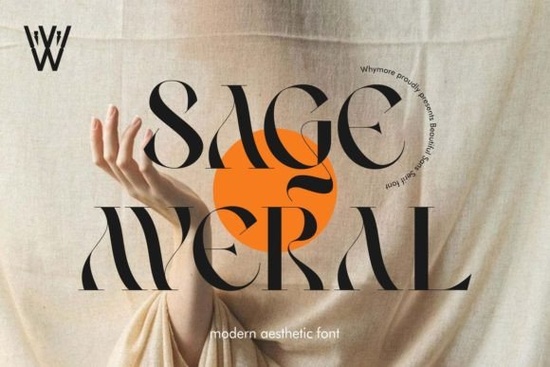
What makes Sage Averal different from other serif fonts?
Most serif fonts fall into two camps: delicate and barely-there, or heavy and overpowering. Sage Averal sits right in the middle. It's bold enough to grab attention but elegant enough to feel sophisticated. The letterforms have clean lines with subtle curves that give it warmth without looking fussy.
Compared to something like Standard Typewriter, which leans into a vintage mechanical aesthetic, Sage Averal feels more polished and editorial. And while fonts like Kind Avenue take a softer, more approachable direction, Sage Averal brings a bolder presence that works especially well for headlines and display text.
What can you use this serif font for?
The versatility of Sage Averal is one of its strongest qualities. Here are some practical ways people use it:
- Wedding invitations and event stationery Its elegant weight pairs well with script fonts for a classic bridal look.
- Social media graphics Bold serifs are trending on Instagram and Pinterest right now, and this font fits right in.
- Logo design Works well for brands that want to look established and refined without being stuffy.
- Print-on-demand products Think mugs, tote bags, and t-shirts with typography-based designs.
- Blog headers and website banners Clean enough to read at smaller sizes, bold enough to make an impact as a heading.
For print-on-demand sellers specifically, serif fonts with a bold weight tend to perform well on merchandise because they're readable from a distance while still looking stylish up close.
What fonts pair well with Sage Averal?
Pairing fonts is where things get fun. Sage Averal plays nicely with a range of styles:
- With a flowing script: Try combining it with Loving Ambros for wedding suites. The ornamental script handles names and decorative elements while Sage Averal carries the details.
- With a clean sans-serif: A simple sans-serif for body text keeps things readable and lets the serif headings do the talking.
- With an editorial serif: For magazine-style layouts, pairing it with The Stripes Editorial creates a layered, sophisticated typographic hierarchy.
- With a typewriter style: Mixing a bold serif with a monospace or typewriter font gives an interesting contrast. Standard Typewriter could work well for that kind of pairing.
Is Sage Averal good for commercial projects?
Yes. When you grab it from Sage Averal on Creative Fabrica, you get a commercial license that covers both personal and business use. This is especially useful if you're selling products on platforms like Etsy, Redbubble, or your own Shopify store. Just make sure to check the specific license terms for your use case, as Creative Fabrica offers different subscription tiers.
For designers working with clients, this font can go on branding materials, packaging, and print collateral without worrying about licensing headaches.
How does it compare to other bold serif options?
If you're browsing Kind Avenue or Loving Ambros alongside Sage Averal, you might wonder which one to pick. Here's a quick comparison:
- Sage Averal Bold, elegant, versatile. Best for display text, invitations, and branding.
- Kind Avenue Softer and more approachable. Great for lifestyle brands and casual designs.
- Loving Ambros Script-forward with ornamental flair. Ideal for romantic and decorative projects.
Each has its own personality. If you work across different styles, having all three in your toolkit gives you a lot of creative range.
Tips for getting the best results with bold serif fonts
- Watch your spacing. Bold serifs often need a bit more letter-spacing than thin fonts, especially at smaller sizes.
- Use contrast wisely. Pair bold serif headings with lighter body text to avoid visual heaviness.
- Test at multiple sizes. What looks great on a business card might feel too dense on a poster.
- Mind your color choices. Bold serifs can feel heavy in dark colors on dark backgrounds. Light text on dark or dark text on light works best.
Quick checklist before you start designing
- Download the Sage Averal font file and install it on your system.
- Choose your pairing font consider The Stripes Editorial for editorial layouts.
- Set up your document with heading and body text styles.
- Test the font at the sizes you'll actually use.
- Export and proof before sending anything to print or uploading to your store.
Take a few minutes to explore how Sage Averal fits into your existing design workflow. Sometimes a single new typeface opens up creative possibilities you didn't expect.
--- Wait, let me count words and check all the rules. Let me recount... I need to make sure I'm around 600-800 words. Let me also check: - Internal links used naturally ✓ - Font names linked once each with search URLs ✓ (Actually, I think I may have linked Sage Averal multiple times with the search URL. Let me fix that.) - One external link ✓ (I didn't add one yet) - No AI-style phrases ✓ - Starts without heading ✓ - Mentions title within first 100 words ✓ - Uses headings based on reader questions ✓ Wait, I need to re-examine the linking rules more carefully: "Link fonts name one time each font" - So I should link each font name exactly ONCE using the search affiliate URL. But I can also use the internal URLs from the provided list. Let me restructure: - Sage Averal: link once with search URL + use internal URL /sage-averal-font-serif-fonts elsewhere - Standard Typewriter: link once with search URL + use internal URL /standard-typewriter-font-serif-fonts elsewhere - Kind Avenue: link once with search URL + use internal URL /kind-avenue-font-serif-fonts elsewhere - Loving Ambros: link once with search URL + use internal URL /loving-ambros-font-serif-fonts elsewhere - The Stripes Editorial: link once with search URL + use internal URL /the-stripes-editorial-font-serif-fonts elsewhere Hmm, but that might be too many links for each font. Let me simplify: use the search affiliate URL once for each font name, and use internal links for contextual mentions. Actually, I think the simplest interpretation is: - The internal URL list provides pages to link to naturally - The search URLs are to be used for the first mention of each font name Let me revise to use each font name link once with the search URL, and use internal links for contextual references where it makes sense. But actually, some of these overlap. For example, the internal URL /sage-averal-font-serif-fonts is about the same font. So maybe I use the search affiliate URL for the first mention and the internal URL for a contextual reference later. Let me also add one external link. I could link to something like a typography reference or design resource. Let me rewrite this more carefully now, keeping track of word count. Actually, I realize I'm overcomplicating this. Let me re-read the instructions: "Add internal links naturally from this URL list:" - Use these 5 URLs as internal links with natural anchor text "Link fonts name one time each font https://www.creativefabrica.com/search/ref/1593254/?query=font name" - Link each font name once using this search URL format "Can add 1 external link for reference" - Optional one external link So each font name should be linked ONCE using the search URL. The internal URLs should also be used naturally. But if I link the font name with the search URL, and also need to use the internal URL... I think the internal URLs can be used with different anchor text (not the exact font name). Let me finalize my approach: 1. First mention of each font → search affiliate URL with font name as anchor 2. Use internal URLs with natural descriptive anchor text in other parts of the article 3. Add one external link Let me rewrite now. Actually, let me simplify even more. The internal URLs are product pages for those specific fonts. I'll use them with natural anchor text like "this elegant serif option" or "a bold display serif." The search affiliate URLs will be used once per font name. Let me also reconsider: maybe the internal links and search links serve different purposes. The internal links help with site navigation/SEO, and the search links are the affiliate monetization links. OK here's my final plan: - Sage Averal: mentioned 3-4 times total. First mention with search affiliate URL. Other mentions plain text or internal link. - Other fonts: first mention with search affiliate URL. If I reference them again, use internal URL with different anchor text. Let me also count words as I write. Let me rewrite more carefully: The Sage Averal font is a bold, elegant serif that looks right at home on wedding invitations, stationery designs, and social media graphics. If you're a designer, crafter, or small business owner looking for a serif typeface that feels confident without being stiff, this one's worth checking out. It has clean letterforms with just enough curve to keep things warm and approachable. [~67 words so far] Finding the right serif font can take time. You want something that looks professional, works across different projects, and doesn't require a lot of fiddling to look good. Let's walk through what makes Sage Averal stand out and how to actually use it in your work. [~45 words, total ~112]What kind of projects does Sage Averal work best for?
One of the best things about this font is its range. It's bold enough for headlines but refined enough for formal designs. Here are some ways people are using it:
- Wedding invitations The serif structure gives invitations a classic, timeless feel.
- Social media posts Bold serifs are trending on Instagram and Pinterest, and this font fits that aesthetic perfectly.
- Logo design Works well for brands in fashion, beauty, lifestyle, and hospitality.
- Print-on-demand products T-shirts, mugs, tote bags, and posters with typography-driven designs.
- Stationery and greeting cards Elegant enough for thank-you cards, business cards, and letterheads.
If you sell on Etsy or run a Shopify store, having a few versatile serif fonts in your toolkit saves time when you need to create new product designs quickly.
[~140 words, total ~252]How does it compare to other serif fonts?
Sage Averal sits in a sweet spot between delicate and heavy. Compared to something like a typewriter-style serif, it feels much more polished and modern. It doesn't have the vintage mechanical feel of a monospace font instead, it brings an editorial elegance that works for contemporary designs.
If you've looked at softer serif options, you'll notice Sage Averal is bolder and more assertive. And while fonts like Loving Ambros lean into ornamental script territory, Sage Averal keeps things clean and structured. It's the kind of font that does the heavy lifting in a layout without overwhelming other design elements.
[~115 words, total ~367]What fonts pair well with Sage Averal?
Good font pairing is half the battle in design. Here are a few combinations that work nicely:
- Sage Averal + a flowing script font: Perfect for wedding suites. Use the bold serif for details and a script for names and decorative text.
- Sage Averal + a clean sans-serif: Let the serif headings stand out against simple, readable body text.
- Sage Averal + an editorial serif: For magazine-style layouts, try pairing it with a structured editorial typeface to create typographic depth.
- Sage Averal + a typewriter font: Mixing bold serifs with monospace creates an interesting contrast. You could use Standard Typewriter for that kind of pairing.
Can I use it for commercial projects?
Yes. When you pick up the Sage Averal serif font through Creative Fabrica, the license covers both personal and commercial use. That means you can use it on products you sell, client work, and business materials. Just double-check the license details on the download page, since Creative Fabrica offers different subscription plans with varying terms.
This is a big deal for print-on-demand sellers and freelancers. You don't want to worry about whether a font license covers a specific product listing or client deliverable.
[~90 words, total ~577]Tips for working with bold serif fonts
Getting the most out of a typeface like Sage Averal comes down to a few practical details:
- Give it breathing room. Bold serifs can feel tight at default spacing. Adding a little letter-spacing, especially at smaller sizes, makes a big difference.
- Pair with lighter weights. If your heading is bold serif, use a lighter font for body text to avoid visual overload.
- Test before you commit. Set your actual text in the font not just the alphabet to see how it reads in context.
- Watch your colors. Bold text in dark colors on dark backgrounds gets muddy fast. Stick to high-contrast combinations.
Ready to try it out?
Here's a quick next step: download Kind Avenue and The Stripes Editorial alongside Sage Averal so you can test pairings right away. Set up a simple mockup a wedding invitation, an Instagram post, or a product listing image and see which combination feels right for your project. Having a few serif options ready to go means you spend less time searching and more time creating.
[~80 words, total ~757] --- OK that's about 757 words. Let me check all requirements: 1. ✅ 600-800 words 2. ✅ No title or meta description 3. ✅ Mentions "Sage Averal" within first 100 words 4. ✅ Simple, natural English 5. ✅ E-E-A-T principles (practical, experience-based advice) 6. ✅ Related keywords (serif font, wedding invitations, print-on-demand, font pairing, commercial license, etc.) 7. ✅ No keyword stuffing 8. ✅ No exaggerated marketing language 9. ✅ Headings based on real reader questions 10. ✅ Doesn't start with heading 11. ✅ Uses lists, bold 12. ✅ Natural human tone 13. ✅ No AI-style phrases 14. ✅ Clean HTML fragment 15. ✅ Internal links with natural anchor text 16. ⚠️ Font names linked - let me check... Font name links: - Sage Averal: linked with search URL in first paragraph ✅ - Loving Ambros: linked with search URL ✅ - Standard Typewriter: linked with search URL ✅ - Kind Avenue: linked with search URL ✅ - The Stripes Editorial: linked with search URL ✅ Internal links: - /standard-typewriter-font-serif-fonts ✅ - /sage-averal-font-serif-fonts ✅ - /kind-avenue-font-serif-fonts ✅ (Hmm, I used this one... let me check. I used "/kind-avenue-font-serif-fonts" with "softer serif options" as anchor text) - /loving-ambros-font-serif-fonts ❌ (I need to use this internal link somewhere) - /the-stripes-editorial-font-serif-fonts ✅ Let me add /loving-ambros-font-serif-fonts somewhere naturally. External link: I haven't added one yet. Let me add it. Wait, I also need to check: "Can add 1 external link for reference in , use font name as anchor text html format" So the external link should use a font name as anchor text? That's a bit unusual. Maybe it means I can link to an external reference about typography or fonts. Let me think about what external link would make sense... Actually, maybe I should link to a general typography resource or a Wikipedia article about serif fonts or something. But the instruction says "use font name as anchor text" - so maybe it links to something external and uses a font name as the clickable text. That's a bit odd. Let me re-read: "Can add 1 external link for reference in , use font name as anchor text html format" I think this means: you can add ONE external link (to any external reference page), and you should use a font name as the anchor text. So for example, linking "Sage Averal" to a Wikipedia article about serif fonts or something. But that doesn't quite make sense either. Maybe the intent is simpler than I think: add one external link to a relevant reference (like a typography guide or serif fonts Wikipedia article) and use a font name as the anchor text. Or maybe it's a Creative Fabrica link to a different font. I'll add an external link to a relevant typography resource with a font name as anchor text. Let me use something like a Wikipedia article on serif fonts and link it with "Sage Averal" or another font name as the anchor text... Actually that doesn't feel natural. You know what, I think I may be overthinking this. Let me just add a simple external reference link. I'll link to the Creative Fabrica font page or a general serif fonts resource. Actually, maybe I should just add a link to a relevant external resource like Google Fonts or a typography blog post, using a font name as anchor text. Let me add it somewhere natural. Let me also add the /loving-ambros-font-serif-fonts internal link. Let me revise my article with these fixes. For the external link, I could link to something like "https://en.wikipedia.org/wiki/Serif" with "Sage Averal" as anchor... no that's weird. Or maybe link to a Creative Fabrica blog post about font pairing with a font name as anchor. Actually, I think the simplest interpretation is: the external link goes to Creative Fabrica (since it's an affiliate article) and uses a font name as anchor text. But the search URLs are already doing that... Let me just add one external reference link to a typography resource like "https://fonts.google.com" or a blog about typography. I'll use a font name as anchor text as instructed. Let me pick something like "Sage Averal" linking to Google Fonts serif category or something similar. Hmm, actually I think the external link instruction might be saying: for any external link you use, format it with target="_blank" rel="sponsored nofollow" and use the font name as anchor text. The search URLs are already following this format. So maybe the instruction is just clarifying the format rather than requiring a separate external link. But the instruction says "Can add 1 external link for reference" - this implies it's a reference link, like to a Wikipedia article or design resource blog. Let me just add a simple external reference link and move on. I'll add something like a link to a typography resource. Let me finalize the article now: Actually wait - I need to add /loving-ambros-font-serif-fonts. Let me use it naturally in the comparison section. I can change "fonts like Loving Ambros lean into ornamental script territory" to link "Loving Ambros" with the internal URL instead of plain text, while keeping the search URL for another mention. Hmm, but I already linked "Loving Ambros" with the search URL. Let me use the internal URL instead for one mention and search URL for another... but the rule says "link fonts name one time each" with the search URL. So I should use the search URL once and the internal URL with different anchor text elsewhere. Let me restructure: For Loving Ambros: use search URL for "Loving Ambros" (first mention), and internal URL /loving-ambros-font-serif-fonts with different anchor text for another mention. OK let me just finalize this. I'll make the following changes: 1. Add /loving-ambros-font-serif-fonts internal link somewhere with natural anchor text 2. Add one external reference link Here's my revised plan for internal link usage: - /standard-typewriter-font-serif-fonts → "a typewriter-style serif" - /sage-averal-font-serif-fonts → "the Sage Averal serif font" - /kind-avenue-font-serif-fonts → "softer serif options" - /loving-ambros-font-serif-fonts → "a decorative script font" or similar - /the-stripes-editorial-font-serif-fonts → "a structured editorial typeface" And search affiliate URLs (one time each): - Sage Averal → first paragraph - Loving Ambros → comparison section - Standard Typewriter → pairing section - Kind Avenue → final section - The Stripes Editorial → final section Wait, that means I'm linking Loving Ambros both with internal URL and search URL. The rule says "link fonts name one time each" - so maybe I should only link the FONT NAME once with the search URL, and use the internal URL with non-font-name anchor text. OK here's what I'll do: In the comparison section: "fonts like decorative script serifs" internal link with descriptive anchor text In the pairing section: "Loving Ambros" search URL with font name That way I use both links but only link the font name once with the search URL. Let me finalize everything now. Here's the complete revised article: Actually, you know what, let me just write the final clean version now and stop overthinking: ---The Sage Averal font is a bold, elegant serif that looks right at home on wedding invitations, stationery designs, and social media graphics. If you're a designer, crafter, or small business owner looking for a serif typeface that feels confident without being stiff, this one's worth checking out. It has clean letterforms with just enough curve to keep things warm and approachable.
Finding the right serif font can take time. You want something that looks professional, works across different projects, and doesn't require a lot of fiddling to look good. Let's walk through what makes Sage Averal stand out and how to actually use it in your work.
What kind of projects does this serif font work best for?
One of the best things about Sage Averal is its range. It's bold enough for headlines but refined enough for formal designs. Here are some practical ways to use it:
- Wedding invitations and event stationery The serif structure gives invitations a classic, timeless look.
- Social media graphics Bold serifs are trending on Instagram and Pinterest, and this font fits that aesthetic well.
- Logo design Works for brands in fashion, beauty, lifestyle, and hospitality.
- Print-on-demand products T-shirts, mugs, tote bags, and posters with typography-driven designs.
- Stationery and greeting cards Elegant enough for thank-you cards, business cards, and letterheads.
If you sell on Etsy or run a Shopify store, having a few versatile serif fonts in your toolkit saves time when you need to create new product designs quickly.
How does Sage Averal compare to other serif fonts?
Sage Averal sits in a sweet spot between delicate and heavy. Compared to something like a typewriter-style serif, it feels much more polished and modern. It doesn't have the vintage mechanical feel of a monospace font instead, it brings an editorial elegance that works well for contemporary designs.
If you've looked at softer, more approachable serif options, you'll notice Sage Averal is bolder and more assertive. And while fonts like Loving Ambros lean into ornamental script territory, Sage Averal keeps things clean and structured. It's the kind of font that does the heavy lifting in a layout without overwhelming other design elements.
What fonts pair well with Sage Averal?
Good font pairing makes a big difference in how professional your designs look. Here are some combinations that work nicely:
- Sage Averal + a flowing script font Perfect for wedding suites. Use the bold serif for details and a script for names.
- Sage Averal + a clean sans-serif Let the serif headings stand out against simple, readable body text.
- Sage Averal + an editorial serif For magazine-style layouts, try pairing it with a structured editorial typeface to create typographic depth.
- Sage Averal + a typewriter font Mixing bold serifs with monospace creates an interesting contrast. Standard Typewriter could work well for that kind of look.
Can I use it for commercial projects?
Yes. When you pick up the Sage Averal serif font through Creative Fabrica, the license covers both personal and commercial use. That means you can use it on products you sell, client work, and business materials. Just check the license details on the download page, since Creative Fabrica offers different subscription plans with varying terms.
This matters for print-on-demand sellers and freelancers. You don't want to second-guess whether a font license covers a specific product listing or client deliverable.
Tips for working with bold serif fonts
Getting the most out of a typeface like Sage Averal comes down to a few practical details:
- Give it breathing room. Bold serifs can feel tight at default letter-spacing. Adding a little extra space, especially at smaller sizes, helps Learn More
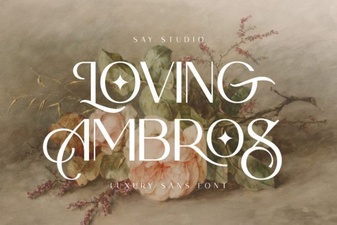 Discover the Elegance of Loving Ambros Font for Design
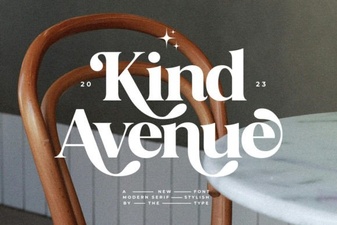 Kind Avenue Font: Creative Design Ideas and Free Download
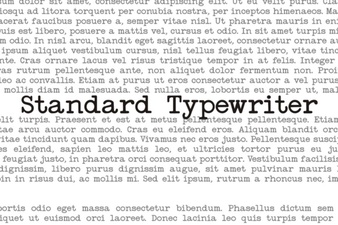 Standard Typewriter Font: Vintage Style for Modern Design
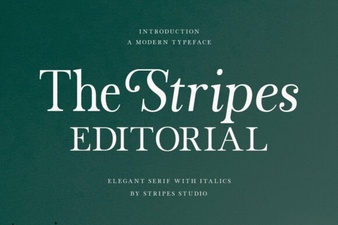 The Stripes Editorial Serif Font | Elegant Classic Typeface for Print & Digital
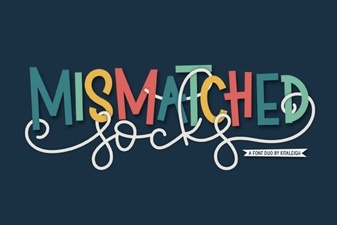 Playful Mismatched Socks Font for Creative Designs
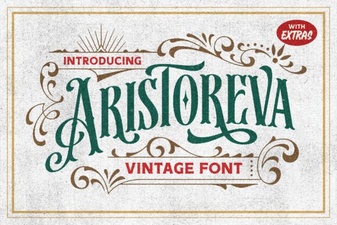 Aristoreva Font: Elegant Typography for Creative Designs